 By yaqoubgurmani4@gmail.com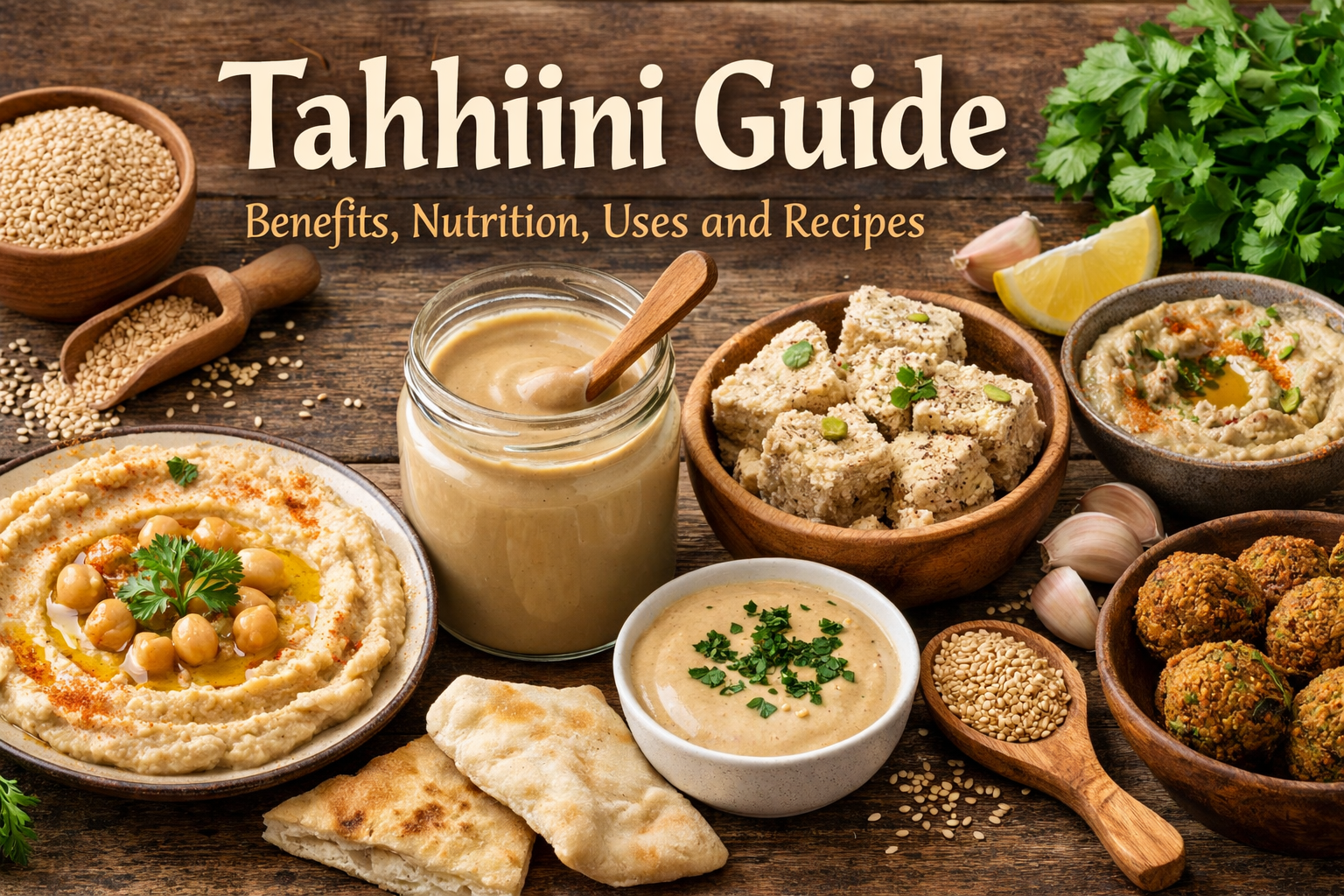
Tahhiini, more commonly spelled tahini, is a smooth paste made from ground sesame seeds. It has a creamy texture and a rich, nutty flavor with a slight natural bitterness. People use it widely in Middle Eastern and Mediterranean cooking, especially in dishes like hummus, baba ghanoush, sauces, dressings, and traditional sweets such as halva.
Tahhiini contains healthy unsaturated fats, plant based protein, fiber, and important minerals like calcium, iron, magnesium, and phosphorus. It fits well into vegan, vegetarian, and gluten free diets. When eaten in moderate portions as part of a balanced diet, it can support heart health, bone strength, and overall nutrition.
What Is Tahhiini Made Of?
Tahhiini contains one main ingredient: sesame seeds.
However, small differences in preparation create variations in taste and color.
Hulled vs Unhulled Sesame Seeds
- Hulled sesame seeds have their outer shell removed. They produce a lighter color and milder taste.
- Unhulled sesame seeds keep the outer shell. They create a darker paste with a stronger flavor and slightly more fiber and minerals.
Both forms offer nutritional value. The choice depends on taste preference.
How Tahhiini Is Made
The process is simple but precise.
- Producers clean sesame seeds.
- Some makers lightly roast the seeds to deepen flavor.
- Others keep the seeds raw for a softer taste.
- They grind the seeds until the natural oils release.
- The paste becomes smooth and creamy.
Because sesame seeds contain natural oil, high quality tahhiini should not need added fats. Oil separation in the jar is natural. Stirring restores the texture.
What Does Tahhiini Taste Like?
Tahhiini tastes nutty, rich, and slightly earthy. It carries a mild bitterness, especially when made from roasted or unhulled seeds.
However, when mixed with lemon juice, garlic, or honey, that bitterness softens. As a result, it becomes creamy and balanced. Therefore, it works beautifully in both savory and sweet dishes.
Nutritional Profile of Tahhiini
Tahhiini is calorie dense because sesame seeds contain natural fat. However, those fats are mostly unsaturated, which are considered heart friendly when consumed in moderation.
Key Nutrients Found in Tahhiini
- Healthy unsaturated fats
- Plant based protein
- Dietary fiber
- Calcium
- Iron
- Magnesium
- Phosphorus
- Zinc
- B vitamins
Nutritional Snapshot Per Tablespoon Approximate
| Nutrient | Approximate Amount |
|---|---|
| Calories | 85 to 100 |
| Protein | 2 to 3 grams |
| Fat | 7 to 9 grams |
| Fiber | 1 to 2 grams |
| Calcium | Small but meaningful amount |
| Iron | Moderate amount |
Values vary by brand and preparation method.
Health Benefits of Tahhiini
Tahhiini supports health in several ways when included in a balanced eating pattern.
1. Supports Heart Health
Tahhiini contains monounsaturated and polyunsaturated fats. These fats may help maintain healthy cholesterol levels. In addition, sesame seeds contain plant compounds such as lignans that may support cardiovascular wellness.
2. Provides Plant Based Protein
Because it offers protein and healthy fat together, tahhiini helps create satisfying meals. Therefore, it may help reduce frequent snacking when used mindfully.
3. Supports Bone Strength
Sesame seeds naturally contain calcium, magnesium, and phosphorus. These minerals play a role in maintaining strong bones and teeth.
4. Offers Antioxidant Compounds
Sesame seeds contain natural antioxidants such as sesamin and sesamolin. These compounds may help protect cells from oxidative stress. Research continues in this area, but current evidence supports their protective role.
5. Helps Energy Production
Iron and B vitamins support energy metabolism. As a result, tahhiini contributes to overall vitality when consumed as part of a varied diet.
Common Culinary Uses
Tahhiini adapts easily to many recipes.
Traditional Dishes
- Hummus
- Baba ghanoush
- Tahhiini sauce with lemon and garlic
- Falafel topping
- Halva dessert
Modern and Everyday Uses
- Salad dressing base
- Smoothie booster
- Toast spread with honey
- Grain bowl drizzle
- Baking ingredient in cookies or brownies
Because of its creamy texture, tahhiini often replaces dairy in vegan cooking.
Tahhiini in Global Cuisine
Although tahhiini began in the Middle East, it now appears worldwide.
- In Lebanon and Israel, it forms the backbone of hummus and sauces.
- In Greece, it appears in sweets and pastries.
- In Turkey, it pairs with molasses for breakfast.
- In North Africa, cooks use it in dips and spreads.
- In Western kitchens, chefs blend it into dressings and plant based desserts.
Therefore, tahhiini connects ancient food traditions with modern wellness cooking.
How to Choose Quality Tahhiini
When buying tahhiini, look for:
- One ingredient: sesame seeds
- Smooth, pourable texture
- No unnecessary additives
Oil separation is natural. However, strong bitterness or sour smell may signal poor quality or spoilage.
Storage and Shelf Life
Before opening, store tahhiini in a cool and dry place.
After opening:
- Keep it sealed tightly.
- Refrigeration extends freshness.
- Stir before each use.
Properly stored tahhiini can last several months.
Who Should Avoid Tahhiini?
People with sesame allergies must avoid tahhiini. Sesame is a recognized allergen in many countries.
Otherwise, most people can safely enjoy it in moderate portions. Because it is calorie dense, portion awareness remains important for those managing weight.
Tahhiini Compared to Other Spreads
| Spread | Main Ingredient | Flavor | Best Use |
|---|---|---|---|
| Tahhiini | Sesame seeds | Nutty, slightly bitter | Sauces, dips, sweets |
| Peanut butter | Peanuts | Sweet, salty | Sandwiches, snacks |
| Almond butter | Almonds | Mild, slightly sweet | Toast, smoothies |
| Sunflower butter | Sunflower seeds | Earthy | Nut free recipes |
While these spreads share similarities, tahhiini stands out for its unique taste and cultural depth.
Why Tahhiini Remains Relevant Today
Tahhiini offers simplicity. It contains one core ingredient and centuries of tradition. At the same time, it fits modern nutrition science and plant based lifestyles.
Moreover, it encourages home cooking. A spoonful transforms simple vegetables, grains, or legumes into something rich and satisfying.
In many ways, tahhiini represents balance. It is ancient yet modern. It is simple yet complex. Its humble yet deeply nourishing.
Final Thoughts
Tahhiini is more than sesame paste. It is a versatile, nutrient rich ingredient with deep cultural roots and wide culinary use. It supports heart health, provides plant based protein, and enhances both savory and sweet dishes.
If you keep one jar in your kitchen, you hold centuries of food tradition in your hands. And with each spoonful, you connect flavor, nourishment, and history in a simple, honest way.